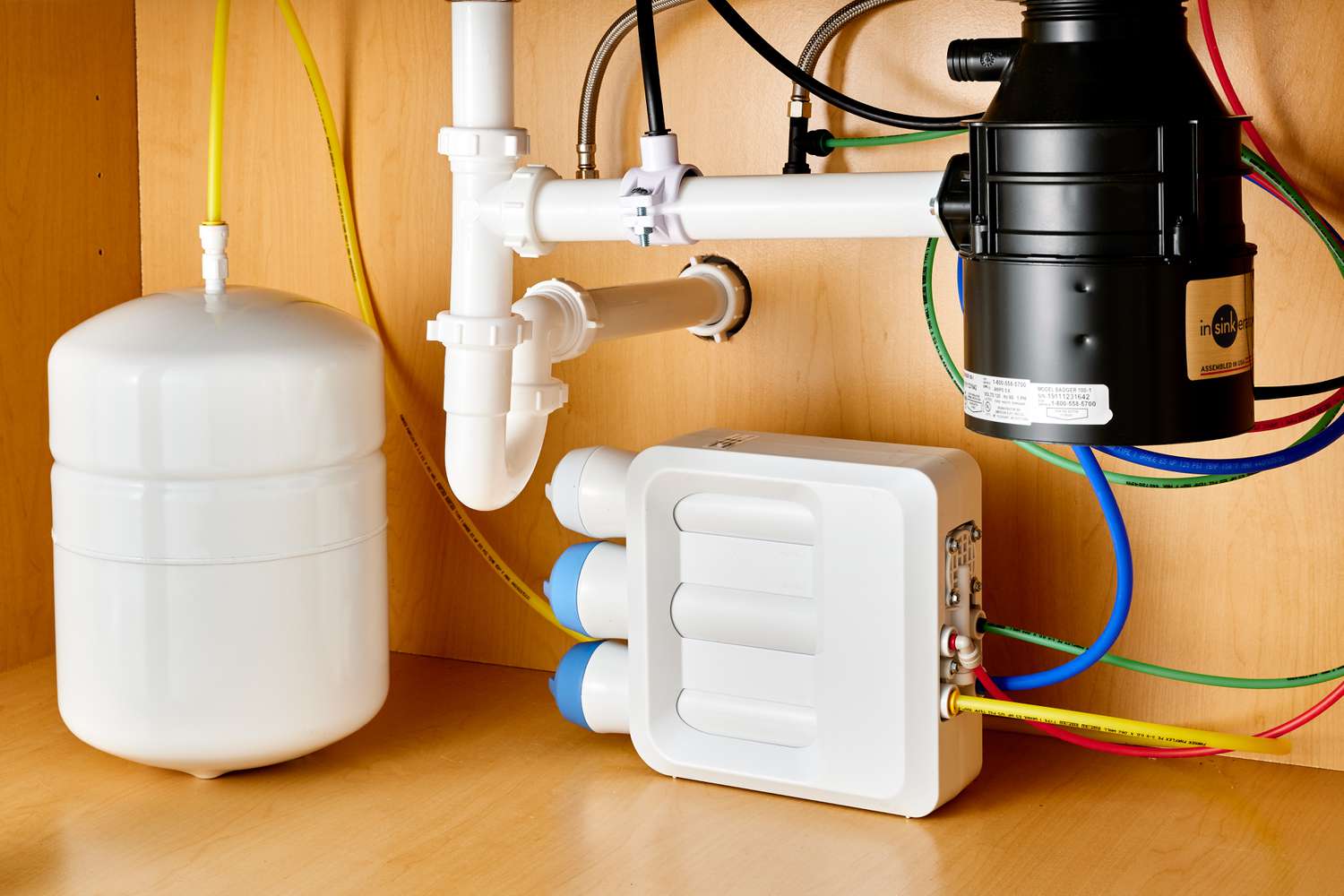
Water has a funny way of becoming part of the background. We use it for coffee in the morning, showers before work, laundry on the weekend, and a hundred little things in between. Because it’s always there, most of us don’t stop to think about what’s actually flowing through the pipes until something changes. Maybe the water starts leaving spots on the dishes. Maybe the shower doesn’t feel quite right. Or perhaps the taste is noticeably different.
These small signs can point to a larger water-quality issue, but they don’t always mean you need an expensive, complicated treatment setup. The better approach is to understand your water first and then choose equipment around the actual problem.
Why Water Quality Isn’t the Same Everywhere
Two houses only a few miles apart can have surprisingly different water conditions. Municipal water is treated before it reaches your home, but its mineral content and other characteristics can vary by location. Private wells have their own challenges, depending on the local geology and groundwater conditions.
This is why a water test is such a useful first step. It provides information about hardness, pH, dissolved minerals, and other characteristics that may influence which treatment methods make sense. Guessing based on taste or appearance can be misleading because some water-quality issues aren’t visible at all.
Testing doesn’t have to turn into a science project. A basic professional analysis can give homeowners a practical starting point and help prevent them from paying for equipment they don’t actually need.
Understanding Hard Water
Hard water is one of the most common reasons homeowners start looking into treatment. Calcium and magnesium are naturally occurring minerals, and while they aren’t generally a reason to panic, they can cause plenty of household headaches.
You may notice white deposits around faucets, cloudy glassware, or scale collecting inside appliances. Soap can also struggle to lather properly, leaving a film behind on showers and sinks. Over time, mineral deposits can reduce the efficiency of water heaters and other equipment.
A softener works differently from a standard drinking-water filter. Its primary job is to reduce hardness minerals rather than simply remove every substance from the water. Understanding that distinction is important when deciding what kind of treatment your home actually needs.
Compare Before You Commit
Shopping for treatment equipment can get confusing quickly. Manufacturers use different terminology, systems come in various sizes, and two products that look similar on paper may perform quite differently in a real household.
A thoughtful water softener comparison should consider more than the purchase price. Look at capacity, regeneration method, water and salt consumption, maintenance requirements, warranty coverage, installation costs, and the expected household water demand.
For example, a small household with moderate hardness may not need the same capacity as a family with several bathrooms and heavy daily water use. Oversizing isn’t always harmful, but it can add unnecessary expense. Undersizing, on the other hand, can leave the system struggling to keep up.
The goal isn’t to find the biggest unit. It’s to find a system that fits.
City Water and Well Water Need Different Thinking
The source of your water makes a major difference. A home connected to a municipal supply may be dealing primarily with hardness, chlorine taste, or sediment from aging infrastructure. A private well can present a broader range of concerns, including iron, sulfur odors, sediment, or changing mineral levels.
That’s why city and well water shouldn’t automatically be approached with the same treatment strategy. Well owners, in particular, can benefit from periodic testing because groundwater conditions can change over time.
For municipal supplies, homeowners can often begin by reviewing their local water-quality report and then testing the water at the property if specific concerns remain. A well owner should consider a more comprehensive testing routine, especially if the water’s appearance, taste, or smell changes unexpectedly.
Tailoring Treatment to Real Household Needs
There’s no universal treatment package that works perfectly for every property. A family of two has different needs from a household of six. A home with older plumbing may have different concerns from a newly built property.
Professional water treatment providers often begin by asking practical questions: How many people live in the house? How many bathrooms are there? Is the water from a municipal supply or a private well? What problems have you noticed? How much water does the household typically use?
Those details matter. A properly sized system should be able to handle normal demand without constantly operating at its limits.
The phrase southern water systems tailored to you captures an important idea in water treatment: location and household circumstances matter. Local water conditions, climate, plumbing design, and individual usage patterns can all influence the appropriate solution.
Filtration and Softening Are Not the Same
One common mistake is assuming that a softener and a filter do exactly the same thing. They don’t.
A softener primarily addresses hardness minerals. Filtration, meanwhile, can target specific particles, chemicals, tastes, odors, or other contaminants depending on the filter media being used.
Activated carbon, for instance, is commonly used to improve taste and reduce chlorine. Sediment filtration can capture physical particles. Reverse osmosis is a different type of treatment that can reduce a wide range of dissolved substances from drinking water.
Sometimes these technologies are combined. Other times, one simple treatment method is enough. Again, the water test should guide the decision.
Maintenance Matters More Than People Think
Installing a treatment system is only the beginning. Filters need replacing, softeners need appropriate salt or maintenance, and mechanical components should occasionally be inspected.
Ignoring maintenance can gradually reduce performance. A system might still be running, but that doesn’t necessarily mean it’s working as intended.
It’s helpful to keep a simple record of filter changes, service visits, and unusual changes in water pressure, taste, smell, or appearance. These notes can make troubleshooting much easier if something goes wrong later.
And don’t overlook leaks. Connections, valves, and fittings should be checked periodically. A tiny drip isn’t always just a tiny drip when it continues for months.
Look Beyond the Initial Price
Price naturally matters, but the cheapest system isn’t necessarily the least expensive option over its lifetime. Consider operating costs, replacement filters, salt usage, electricity where applicable, servicing, and potential repairs.
A system that costs slightly more upfront but uses fewer consumables and requires less frequent maintenance could have a different long-term cost than a bargain unit.
It’s also worth asking who will install the equipment and what happens if something needs attention later. Clear installation terms and accessible service can be just as valuable as the equipment itself.
Making a Confident, Practical Choice
Good water treatment doesn’t need to feel overwhelming. Start with the water itself. Test it, understand the results, identify the problems that actually affect your household, and then compare solutions based on performance and long-term practicality.
Sometimes the answer is a softener. Sometimes it’s filtration. Sometimes the best decision is a combination of technologies — and sometimes, surprisingly, it’s doing very little beyond regular testing and maintenance.
The important thing is to avoid treating water problems with guesswork. Your home, your plumbing, and your daily habits all tell part of the story.
Once you approach water treatment that way, the process becomes much simpler. You’re not just buying a machine for the garage or basement. You’re choosing a system that should quietly do its job every day, without demanding much attention from you.
And honestly, that’s probably what good water treatment should feel like: effective, dependable, and almost invisible in the background of everyday life.